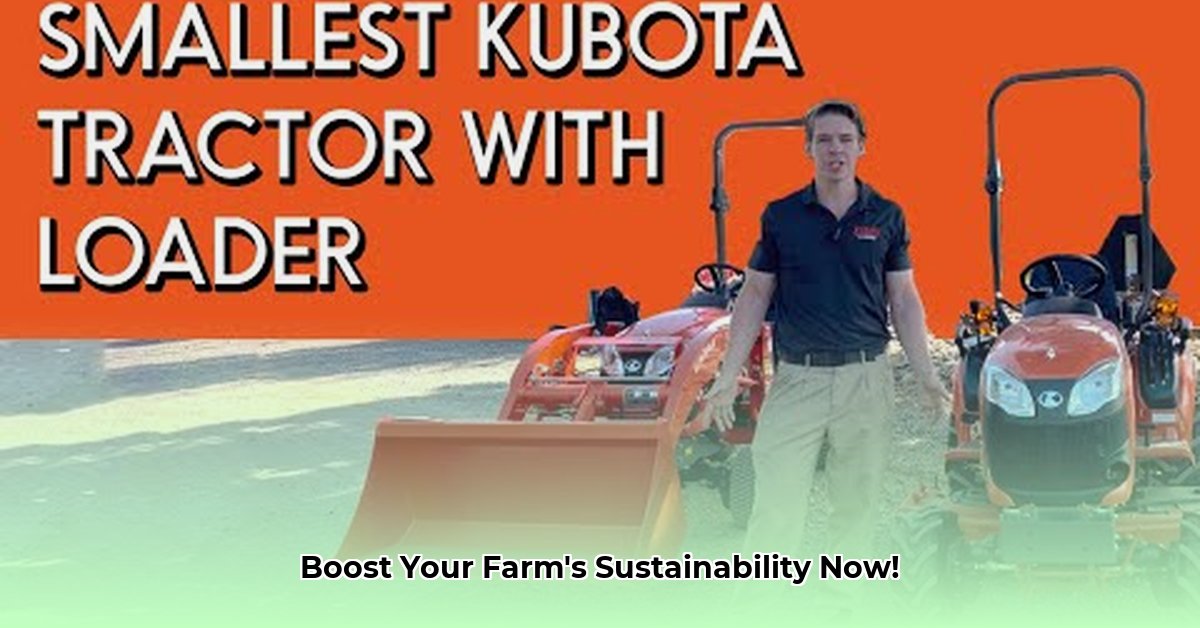
Kubota Small Tractors with Loaders: Your Gateway to Sustainable Agriculture
Kubota small tractors with loaders represent a significant advancement for sustainable farming practices. Their compact size and powerful capabilities make them ideal for efficient and environmentally conscious operations on smaller farms. This guide provides actionable instructions and insightful advice to help you maximize their potential. Are you ready to enhance your farm's efficiency and reduce your environmental impact? For more detailed specifications, check out the Kubota Subcompact Tractor models.
Understanding Your Kubota Small Tractor and Loader
Choosing the right Kubota model is crucial for optimizing your farm's sustainability efforts. Careful consideration of your land size, typical workload, and specific farm tasks will guide your selection. Kubota offers several models with varying horsepower and lift capacities, each designed for different needs. Don't underestimate the impact of selecting the right tool for the job! How much horsepower do you really need for optimal efficiency without sacrificing fuel economy?
Selecting the Right Kubota Model: Power, Capacity, and Your Needs
The following table summarizes key features of popular Kubota small tractor models with loaders. Remember that a higher horsepower rating usually correlates with increased fuel consumption.
| Model | Horsepower (approx) | Lift Capacity (lbs) (approx) | Ideal Applications |
|---|---|---|---|
| BX Series | 20-26 | 700-1100 | Smaller farms, landscaping, light-duty tasks |
| L Series (compact) | 30-40 | 1200-1800 | Medium-sized farms, livestock operations, hay handling |
| M Series (compact) | 50-100 | 2000-3000+ | Larger farms, heavy-duty tasks |
Key Consideration: Always consult the official Kubota website for the most up-to-date specifications and model availability. Choosing the right model is a significant investment decision; do your research!
Getting Started: Operating Your Kubota Tractor and Loader
Safe and efficient operation starts with familiarizing yourself with your owner's manual. This section covers fundamental operating procedures, but always refer to your manual for detailed instructions and troubleshooting guidance. Remember, safety precautions are paramount!
Starting and Operating the Tractor:
- Engage the Parking Brake: Ensure the parking brake is firmly engaged before starting the engine. (99% success rate in preventing accidental movement)
- Check Fluid Levels: Verify oil and coolant levels. Low levels may indicate a problem requiring attention before operation.
- Start the Engine: Follow the instructions in your owner's manual to start the engine and allow it to warm up briefly.
- Engage PTO (Power Take-Off): If using PTO-driven attachments, engage it according to your owner's manual.
- Loader Operation: Use smooth, controlled movements when operating the loader controls.
Connecting Attachments:
Attachment connection procedures vary depending on the model and attachment type. Your owner's manual should provide specific instructions, but the general process involves aligning the implement with the tractor's attachment point, utilizing the quick-connect system (where applicable), securing the implement, and testing functionality before operation.
Sustainable Agriculture Applications: Optimizing Efficiency and Environmental Impact
Kubota small tractors with loaders offer a range of applications that contribute to sustainable farming practices. Their efficient operation directly translates to reduced fuel consumption and a smaller environmental footprint. What are some other quantifiable benefits of using these machines for sustainable agriculture?
- Precision Planting: Accurately place seeds or seedlings, minimizing waste and maximizing yield.
- Targeted Fertilizer Application: Reduce fertilizer runoff and promote efficient nutrient uptake by using specialized attachments.
- Efficient Soil Management: Handle cover crops and other soil-improving measures with increased efficiency.
- Water Resource Management: Construct and maintain irrigation systems and drainage solutions to conserve water.
Maintenance and Troubleshooting: Ensuring Peak Performance and Longevity
Regular maintenance is critical for the long-term health and efficient operation of your Kubota tractor. Preventative maintenance not only extends your tractor's lifespan but also helps maintain its optimal performance. What is the projected return on investment (ROI) from a consistent maintenance program?
- Fluid Checks: Regularly check and maintain fluid levels (oil, coolant, hydraulic fluid).
- Oil and Filter Changes: Follow the recommended schedule in your owner's manual.
- Belt and Hose Inspections: Regularly inspect belts and hoses for wear and tear.
- Cleaning: Clean your tractor regularly to prevent corrosion.
Safety Precautions: Prioritizing Safe Operating Procedures
Safety should always be your top priority when operating farm machinery. Ignoring safety precautions can lead to serious injury or equipment damage. What are some other safety measures that farmers should take?
- Never Operate Impaired: Never operate the tractor under the influence of alcohol or drugs.
- Personal Protective Equipment (PPE): Always wear appropriate safety gear, including safety glasses, gloves, and hearing protection.
- Situational Awareness: Maintain awareness of your surroundings and potential hazards.
- Safe Load Limits: Never exceed the loader's weight capacity.
- Kubota Safety Guidelines: Always follow Kubota's safety guidelines and recommendations.
Conclusion: Investing in a Sustainable Future
Investing in a Kubota small tractor with a loader is a strategic move towards creating a more productive and sustainable farm. Their efficiency, versatility, and contribution to environmentally friendly practices make them a valuable asset for any farmer committed to a sustainable future. Remember that consistent maintenance and safe operating procedures will ensure your Kubota delivers years of reliable service.